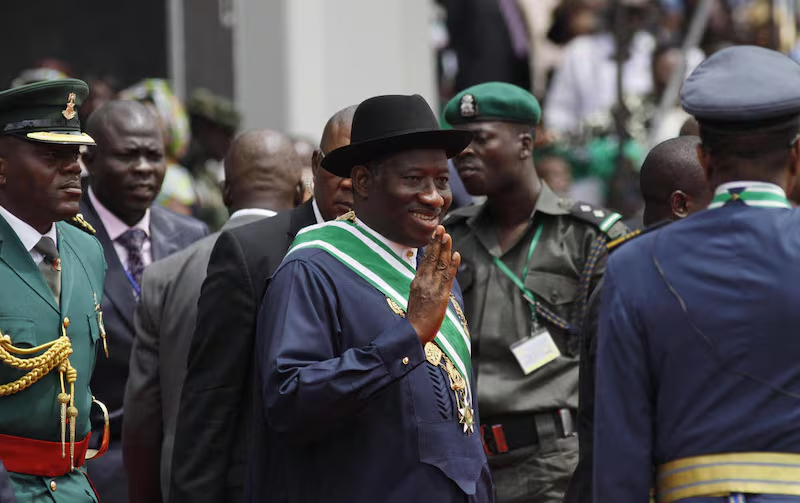
Goodluck Ebele Jonathan is one of Nigeria’s most recognized political figures, known for serving as the President of Nigeria from 2010 to 2015.
Jonathan rose from a humble background in the Niger Delta region to become the country’s Vice President and later President, making history in Nigeria’s democratic journey.
Early Life of Goodluck Jonathan
Goodluck Ebele Jonathan was born on November 20, 1957, in Otuoke, a community in present-day Bayelsa State, Nigeria.
He was raised in a modest family and spent much of his early years in the Niger Delta region. Jonathan attended primary and secondary schools in the area before proceeding to higher education.
Educational Background
Jonathan studied at the University of Port Harcourt where he earned a Bachelor’s Degree in Zoology.
He later obtained a Master’s Degree in Hydrobiology and Fisheries Biology as well as a Doctorate Degree from the same institution.
Before entering politics, Jonathan worked as a teacher, education inspector, and environmental protection officer.
Entry Into Politics
Goodluck Jonathan began his political career in 1998 when Nigeria returned to democratic rule.
He became the Deputy Governor of Bayelsa State in 1999 alongside former Governor Diepreye Alamieyeseigha. After Alamieyeseigha’s impeachment in 2005, Jonathan became the Governor of Bayelsa State.
His rise in national politics continued in 2007 when late President Umaru Musa Yar’Adua selected him as running mate for the presidential election.
The pair won the election, making Jonathan Nigeria’s Vice President.
Becoming President of Nigeria
Following the illness and eventual death of President Yar’Adua in 2010, Jonathan was sworn in as Acting President before later becoming Nigeria’s President.
He officially contested and won the 2011 presidential election under the platform of the People’s Democratic Party.
During his administration, the government focused on sectors such as agriculture, road construction, aviation reforms, and telecommunications expansion.
2015 Presidential Election
Jonathan contested for a second term in the 2015 general election but lost to Muhammadu Buhari of the All Progressives Congress.
He gained international recognition after peacefully conceding defeat, a move widely praised as a major step for democracy in Nigeria and Africa.
Life After Presidency
Since leaving office, Goodluck Jonathan has remained active in diplomacy, peacebuilding, and international election observation missions across Africa.
He frequently participates in discussions on governance, democracy, and conflict resolution through his foundation and international engagements.
Jonathan is also regarded as one of the influential political voices from the Niger Delta region.
From his beginnings in Bayelsa State to becoming Nigeria’s President, Goodluck Ebele Jonathan’s political journey remains one of the notable stories in the country’s democratic history.
His role in promoting peaceful democratic transition continues to be remembered both in Nigeria and internationally.